About ODNS
Otters Den Nature School provides high quality, affordable, after-school outdoor learning for school-age students in Bellingham.
Our programs build environmental stewardship and scientific literacy through hands-on STEM and field based learning. This creates students who understand their local ecosystems and are empowered to care for it no matter where they live.
Goals & Objectives
-
Support whole-child wellness
-
Strengthen social emotional skills
-
Nurture relationship with and understanding of the environment
-
Inspire active and loving stewards of natural spaces
-
Meet Washington State learning standards in environmental education
-
Provide State learning standards aligned instruction in science, technology, engineering, the arts, and math through field-based learning
-
Increase family access to affordable, after school care
Why Outdoor Learning?

Outdoor learning is vital for children's holistic development, addressing both the modern reality of diminished nature exposure and the deep developmental benefits that time in nature provides. Richard Louv’s work, including Last Child in the Woods, highlights how disconnection from nature—what he calls “nature-deficit disorder”—is linked to increased stress, attention challenges, and reduced wellbeing, and conversely, that regular outdoor experiences support cognitive focus, emotional regulation, and creativity. The Children & Nature Network emphasizes that nature isn’t just a backdrop for play but a powerful context for learning that fosters social skills, scientific curiosity, and emotional resilience—benefits backed by a growing body of evidence showing improved academic engagement and overall wellbeing when children learn outdoors. Building on these ideas, educator David Sobel’s place-based education approach argues that most meaningful learning happens when students connect with their own local environment, strengthening not only academic competencies like critical thinking and problem solving but also a sense of belonging, stewardship, and intrinsic motivation to learn.
Philosophy
Our school’s philosophy is to cultivate ecological literacy through developmentally responsive, inquiry-driven experiences in the natural world. Learning intentionally begins with curiosity, sensory awareness, and emotional connection, then flows into focused investigation of environmental systems, relationships, and human impacts through hands-on exploration. Educators facilitate reflection, dialogue, and evidence-based sensemaking, helping students integrate lived outdoor experiences with scientific understanding and real-world relevance. Through this purposeful progression, students build critical thinking skills, resilience, environmental stewardship, and a deep sense of belonging within the places they learn.
Core Values
-
Place-based and field-based learning---an educational approach that uses direct experiences in local, real-world environments to ground learning in meaningful, hands-on exploration connected and relevant to local community, culture, and ecology.
-
Attentiveness and presence — cultivating awareness, stillness, and deep observation to strengthen relationships with self and others (social-emotional learning), and the environment.
-
Joy, curiosity, and playfulness — valuing positive emotions as powerful motivators for engagement and life-long stewardship.
-
Inquiry-based and student-centered learning— Students actively ask questions, investigate real-world issues, and construct understanding through exploration and discussion.
-
Interdisciplinary learning and environmental literacy— Students operate within multiple subjects (such as science and social studies) to build knowledge, skills, attitudes, and behaviors that support responsible citizenship and stewardship.
Program & Curriculum
Location
The after-school program integrates proven nature-connection and inquiry-driven pedagogies to create meaningful, developmentally responsive outdoor learning experiences. Drawing on elements of “Flow Learning” the program guides students from curiosity and sensory awareness into focused exploration, skill-building, and reflection—fostering both ecological literacy and a deep sense of belonging in the natural world. These approaches are thoughtfully integrated with best teaching practices for science, technology, engineering, and math (STEM), emphasizing hands-on investigation, systems thinking, and real-world problem solving.
Instruction is supported by high-quality, research-based environmental education curricula, including Project Learning Tree, Project WET, and Project WILD, ensuring lessons are engaging, Washington State Standards-aligned, and grounded in locally relevant environmental science. Project Learning Tree focuses on forests, ecosystems, and sustainability; Project WET centers on water science, conservation, and stewardship; and Project WILD highlights wildlife, habitats, and human–nature interactions. Together, these nationally recognized programs provide a rich toolkit of inquiry-based, place-based lessons that cultivate observation, critical thinking, collaboration, and environmental stewardship through direct experience in local landscapes.
Curriculum samples and additional information are available at plt.org and projectwet.org.
Summer technology camps offer place-based and field-based learning experiences but with greater emphasis on WA State Engineering and Design Standards. Students design, build, and test technologies such as wind turbines and remotely operated vehicles (ROVs) to develop systems thinking, collaboration, and environmental stewardship.
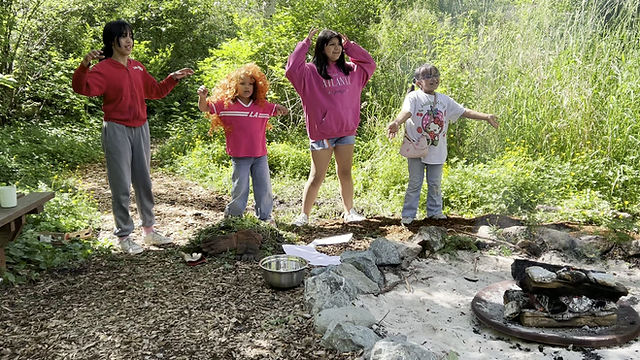
Our program is located at 1530 E. Bakerview Road on Bellingham Covenant Church's outdoor property. Outdoor School is held entirely outdoors, rain or shine, except for bathrooms and in emergencies. The outdoor property includes about 4 acres of beautiful nature trail, amphitheater and campfire, pond, wetland, and forest.